
Boats are expensive and the foundational equipment required for a raft trip. When it’s time to buy one – or upgrade your current one – you want to make sure you’re getting what you want and can depend on. Getting the most value out of that expense can often mean considering a used raft – this can be a great approach, as long as you focus on some key details that won’t leave you with unplanned fixes or worse, equipment failures. Those considerations:
How old is it? Unlike a car, there aren’t a lot of moving parts on a raft – there’s no timing belt that needs to be replaced every 80,000 miles or shocks that fail after 5 years. But the materials used – especially those at high stress points (welds/seams/floors) and high friction points (D-rings, frame locations, undersides) do experience wear and tear. Manufactures warrant the structure and function of these areas as an indicator of the overall boat. That warranty (and the remainder of it available to you in purchasing a used raft) should be an important consideration.
What is it made of? While there is some variation in things like environmental exposure (think UV reactivity) or storage (some materials do better rolled, some do better inflated), mostly what I’m referring to here is the quality of the starting material. Is the PVC the vendor’s ‘thin’ line because they were focusing on the weight and pricing in their line? Do they glue their seams or are they welded? Is there an internal bladder that can be replaced but needs some disassembly to inspect?
How was it used? Boats used by recreational rafters get seasonal use, typically up to 30-40 days per year at the high end. Commercially used rafts have much higher use – 3-4x the number of days is typical. Manufacturers typically adjust their warranties to reflect this (example: 2 years for commercial use, but 5 years for private boaters), and you should, too. Boats used by commercial outfitters shouldn’t be dismissed from consideration, but you should expect the price to be lower, since they are ultimately ‘more used’ than one of the same age owned by a recreational boater, and likely no longer covered by the manufacturer’s warranty.
How was it cared for? One of the things good commercial outfitters do well to keep their boats available is clean, inspect, and repair important problems, and store their rafts in a way that makes them available when they’re needed. Not all boat owners know to do the same, which can lead to deterioration or wear.
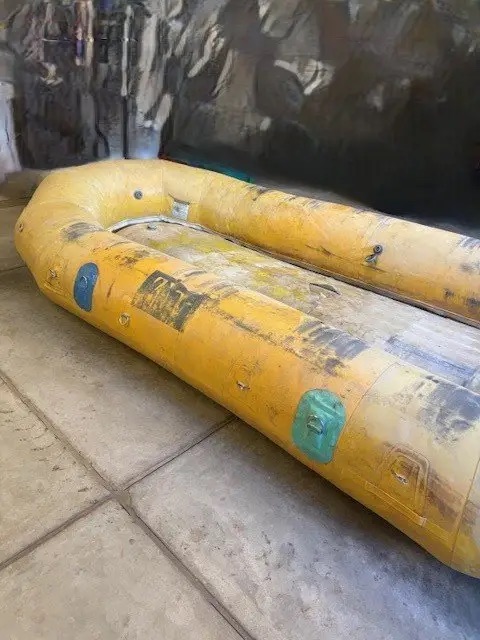
How was it repaired? Patches and other repairs are often necessary – holding air is the most important job of an inflatable boat. When they are needed, these fixes can be nearly as good as the original material and construction. The mere presence of a patch or visible repair shouldn’t be a deal-breaker, but it does require the asking of more questions. Was the repair done in the field and not re-worked back in a more controlled environment? Was it done with the best materials – including appropriate solvents and adhesives? Was it done with the right margins, and on the right surface (was it possible to patch on the inside of the tube and with enough surface area to be permanent?)
How much of the above are you willing to address? Stressed D-rings, leaking valves, or clumsy patches can all be repaired – often improved to near-new service life. And if you don’t have the skill or time to do these repairs yourself, local shops (in the Portland area check out All Inflatable Repair) can help. Just make sure to include your time/shop cost, supplies, and the downtime of the boat in the price you’re willing to pay. A $3000 boat that needs a new $1500 floor and won’t be usable for 6 weeks may not be the deal it looks like at first glance, compared to the $5000 one that needs nothing.
I’ve bought high quality used boats for my personal use, and by doing the right research, asking the right questions, and including the right considerations in the price I was willing to pay I’ve found great ones.
 Clean Lines Paddlesports
Leave a comment