
In environmental biology there’s a concept called an ‘indicator species.’ It’s one of those ideas that seems straightforward but sometimes gets lost in the message; it basically boils down to “we can determine the health of the entire ecosystem by monitoring the status of this one species, because the variables correlating to its health are the same that correlate to the ecology of the area.” The most famous (or infamous) indicator species is probably the Spotted Owl. At the end of the last century, these birds were a lightning rod in the Pacific Northwest, since the ecosystem health they indicated was that of temperate old growth forests. Scientists and others cared about their population not just because they were threatened, but because the birds represented the area overall. That last part was missed by many, and the birds were reviled as being deemed more important than humans.
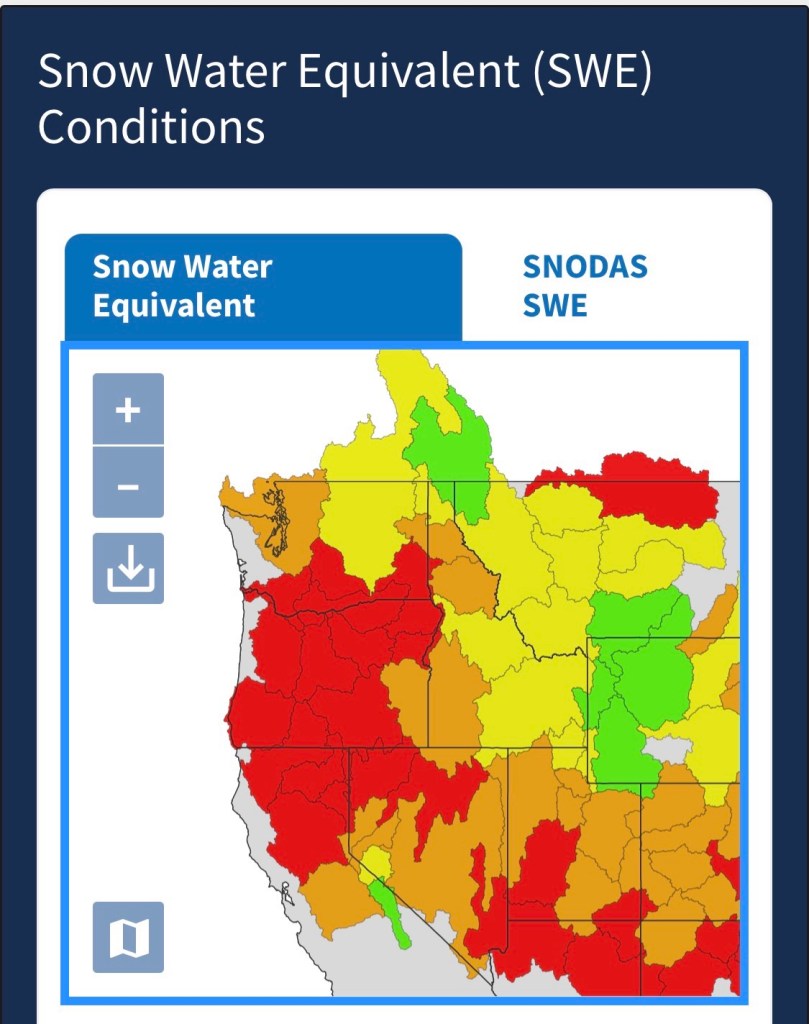
Our rivers and streams are their own version of an ecosystem. The summer of 2026 is looking like it’s going to be hard on them. Honestly, the spring of 2026 looks like it’s going to be the same; snowpack is at near historic lows for this time of year and the long range forecast doesn’t project any significant improvement before thawing. And when I think about a human corollary to an indicator species for our rivers, rafters come to mind. The things that humans and other living things need from healthy watersheds typically match the conditions needed by rafters. Flow, snowpack, turbidity, temperature, peak vs gradient volume – these are all important variables not just in how rafters experience the health of a river, but how municipal drinking water, fishing, other boating, fire suppression/prevention, agriculture, and aquatic and terrestrial species’ health are affected. A bad rafting year means a bad year for all these others, too.
What can we do? Protect the lands that supply our rivers. Keep uses to the kind that minimize outsized negative consequences like large scale resource extraction. Minimize inefficient use of water by agriculture and industry (AI and data centers are current examples). Return as many processes and cycles to historic/natural ones as possible – including hydrologic and fire cycles. And know that the down level we’re at this year isn’t permanent, but is part of a cycle itself. There will be better years.
Things on the water are still happening. Rafting this summer is going to be earlier and bonier, but it will continue. Maybe take a smaller boat. Maybe pack lighter. Maybe get some shoal-cut oars or a packraft to still be able to get out in August. And maybe share your role as a member of the ‘indicator species’ and how it represents other important uses when you get the chance.
 Clean Lines Paddlesports
Leave a comment